Solar Inverters Guide: Types, Shade, Batteries, and Quote Checks
Compare solar inverter types, shade handling, clipping, monitoring, battery compatibility, serviceability, and quote questions.
Quick answer
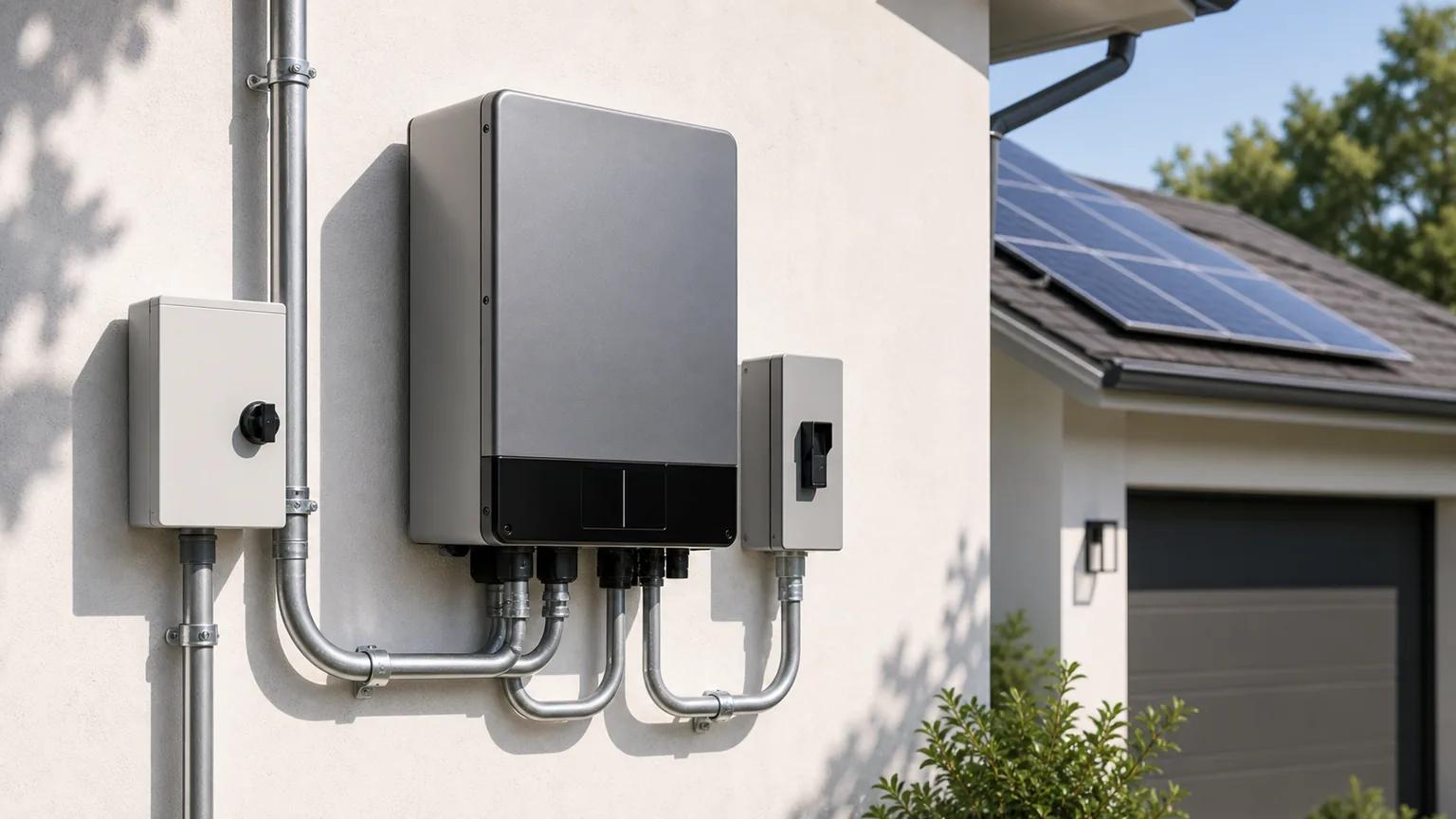
A solar inverter converts panel DC power into AC electricity the home can use. Inverter choice affects shade tolerance, monitoring, clipping, serviceability, battery compatibility, and how easy the system is to expand later.
The best inverter strategy depends on roof complexity, shade, panel layout, budget, backup goals, and whether storage may be added now or later.
Main inverter types
Most residential quotes use one of a few inverter strategies.
- String inverter: panels feed one central inverter, often best on simple low-shade roofs.
- Microinverters: each panel has panel-level conversion, often useful for monitoring and complex layouts.
- Power optimizers: panel-level electronics work with a central inverter to improve design flexibility and monitoring.
- Hybrid inverter: designed to integrate solar and battery storage more directly.
Shade and roof complexity
Inverter strategy becomes more important when the roof has multiple orientations, dormers, trees, chimneys, vents, or uneven production. The goal is not always maximum equipment complexity; it is matching the design to the site.
If shade is part of the quote discussion, read roof shading and solar production losses.
- Simple roof planes may not need panel-level electronics.
- Complex roof planes may benefit from panel-level monitoring or optimization.
- Shade analysis matters more than generic inverter marketing.
Clipping and DC-to-AC ratio
Some systems are designed with panel DC capacity higher than inverter AC output. Occasional clipping can be normal, but it should be explained in the production estimate instead of hidden.
- Ask what DC-to-AC ratio the quote uses.
- Ask how much annual production is expected to be lost to clipping.
- Compare annual kWh production, not just inverter nameplate capacity.
Battery compatibility
Battery plans can make inverter choice more important. A solar-only quote that is cheapest today may not be the easiest system to pair with storage later.
If backup storage is likely, compare inverter strategy with the solar battery buying guide and solar batteries guide.
- Ask whether the system is battery-ready or would need retrofit equipment.
- Ask whether storage will be AC-coupled or DC-coupled.
- Ask how backup loads and solar recharging work during an outage.
Monitoring and serviceability
Monitoring can help spot production issues, but serviceability matters too. A system should be easy enough for the installer or service provider to diagnose over time.
- Panel-level monitoring can help identify panel-specific problems.
- Central inverter replacement may be simpler in some designs.
- Roof-mounted electronics can add more components exposed to heat and weather.
- Ask who monitors the system and who responds to alerts.
Questions to ask about inverter quotes
- What inverter type is included and why is it right for this roof?
- How does the design handle shade and multiple roof planes?
- What annual kWh production estimate is tied to this inverter design?
- Is the system compatible with future battery storage?
- What monitoring is included?
- What warranty and labor coverage apply to inverter replacement?
For panel choice context, use the solar panels guide.
Bottom line
Inverter choice should follow the roof, shade, monitoring needs, battery plans, and service expectations. Compare inverter quotes by design fit and annual production assumptions, not just brand names.
Evidence
Sources and methodology
SolarPel inverter guidance evaluates inverter strategy by roof complexity, shade, annual production, DC-to-AC ratio, monitoring, serviceability, and battery compatibility. It avoids ranking equipment without product-specific source review.
design fit
Frames inverter selection around roof design, shade, monitoring, clipping, and battery plans.
mistake warning
Warns against selecting inverter equipment by brand name without checking production and compatibility assumptions.
methodology
Connects inverter choice to panel selection, system sizing, battery buying, and roof-shading articles.
Article FAQ
Common questions
What does a solar inverter do?
A solar inverter converts DC power from solar panels into AC electricity the home can use. It also affects monitoring, grid interaction, and sometimes battery compatibility.
Which solar inverter type is best?
There is no single best type for every home. String inverters, microinverters, optimizers, and hybrid inverters each fit different roof, shade, monitoring, and battery needs.
Do I need microinverters if my roof has shade?
Maybe. Panel-level electronics can help on complex or shaded roofs, but a shade analysis and production estimate matter more than a generic rule.
What is inverter clipping?
Clipping happens when panel DC output exceeds inverter AC output. Some clipping can be normal, but the quote should explain expected production impact.
Does inverter choice affect battery storage?
Yes. Battery compatibility depends on inverter type, coupling strategy, gateway equipment, backup design, and monitoring. Ask before assuming storage can be added easily later.
Written by
Firoz Ahmed
SolarPel Editorial Lead
Firoz Ahmed writes SolarPel's solar calculators, planning guides, and technical explainers with a focus on practical home-energy decisions, transparent assumptions, and source-backed solar research.