Roof Shading and Solar Panels: How Much Production You Can Lose
Learn how roof shading affects solar panel production, what to ask installers, and how to compare shaded array designs.
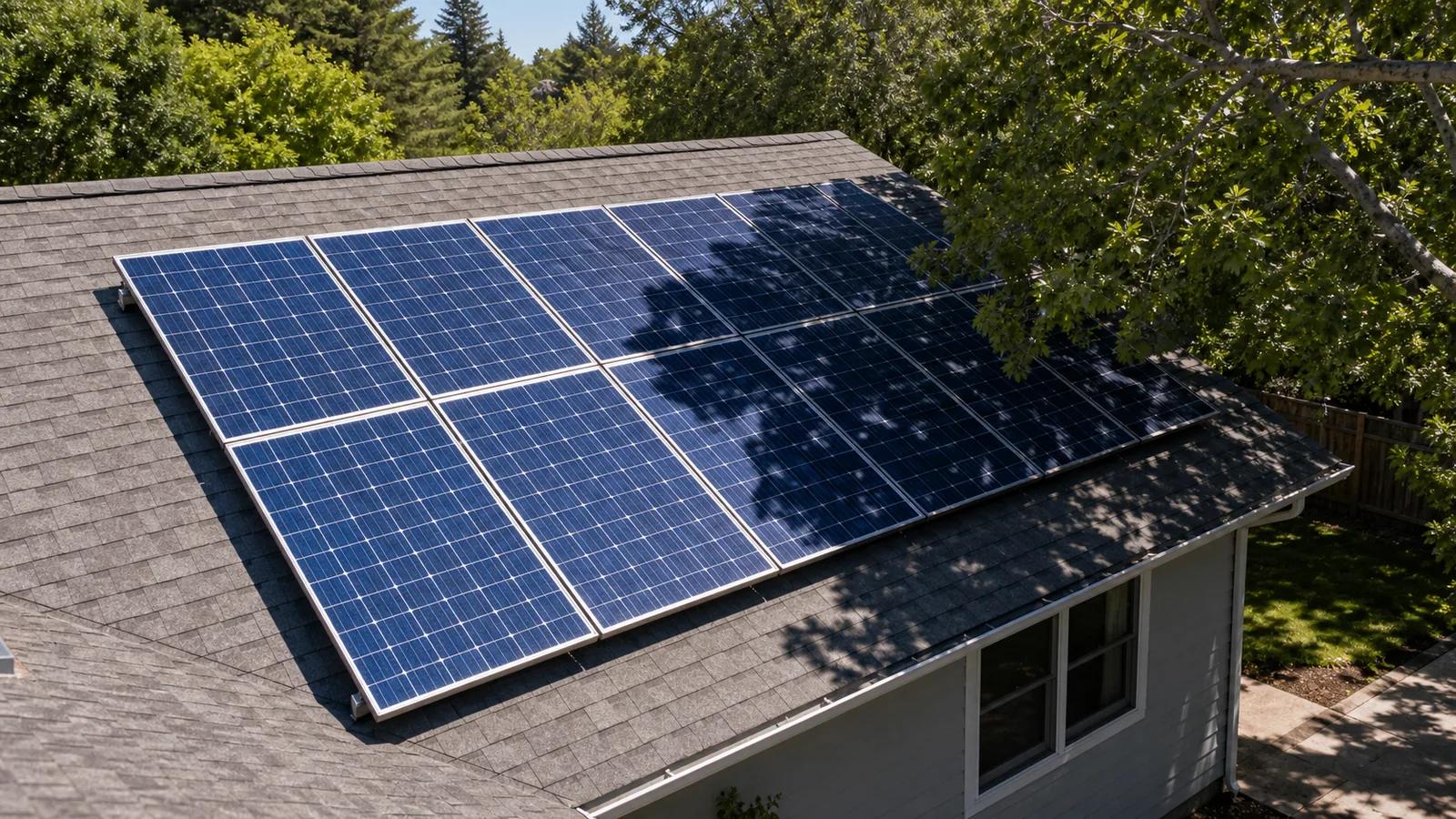
Roof shade is one of the fastest ways to turn a good solar estimate into a disappointing one. The important question is not whether shade exists. The question is when it happens, which panels it touches, and whether the system design accounts for it.
Why shade changes production
Solar panels produce best when light is direct and consistent. A tree, chimney, dormer, vent, or nearby building can reduce output during the hours when the array would normally make the most electricity. Shade late in the afternoon may matter less than shade across the best south or west roof plane around midday.
What to check before approving a layout
- Ask whether the installer measured shade on site or only used aerial imagery.
- Review the panel layout and identify which roof planes carry most of the production estimate.
- Ask how annual production changes if a shaded section is removed from the design.
- Confirm whether microinverters or optimizers are included to reduce mismatch losses.
Tree trimming and roof tradeoffs
Tree trimming can help, but it is not always the right answer. Consider local rules, tree health, privacy, cooling shade, and the cost of ongoing trimming. Sometimes a smaller clean array beats a larger array that depends on aggressive trimming every year.
Before comparing proposals, run a conservative system size in the Panel Estimator and use the lower production case in your payback review.
Practical next steps for homeowners
When two proposals handle shade differently, ask each installer to show the annual production estimate with and without the shaded section. This makes the tradeoff visible: more panels do not always mean more useful solar if the extra panels sit in poor sun.
Red flags in shaded designs
- A large production estimate with no shade report or explanation.
- Panels placed under predictable tree shade without a trimming plan.
- A payback estimate that does not change when shaded panels are removed.
- No explanation of inverter choice on a roof with mixed orientations or partial shade.
After installation
Save the proposal production estimate and compare it with monitoring data over full months, not single days. Weather can hide the pattern in the short term. If several clear months are far below expectation, ask the installer to review shade, equipment status, and monitoring data.
For early planning, lower the production assumption in the Panel Estimator rather than assuming every roof plane performs like the best one.
Where to go next
For the full planning path, use the Solar System Sizing Guide as the main hub, then run the matching SolarPel calculator with your own usage, cost, and roof assumptions.
Article FAQ
Common questions
Does a small amount of shade matter?
Yes, especially if it hits panels during high-production hours. The impact depends on timing, layout, inverter design, and how many panels are affected.
Are microinverters always the solution for shade?
No. They can reduce some mismatch losses, but shade still reduces sunlight. A cleaner layout may be better than relying only on electronics.
Should I remove trees before installing solar?
Not automatically. Compare trimming cost, tree value, local rules, and production benefit before making a decision.
Written by
Firoz Ahmed
SolarPel Editorial Lead
Firoz Ahmed writes SolarPel's solar calculators, planning guides, and technical explainers with a focus on practical home-energy decisions, transparent assumptions, and source-backed solar research.