Solar Inverter Types: String, Microinverter, and Optimizer Guide
Compare string inverters, microinverters, and optimizers so you can understand solar quote equipment choices.
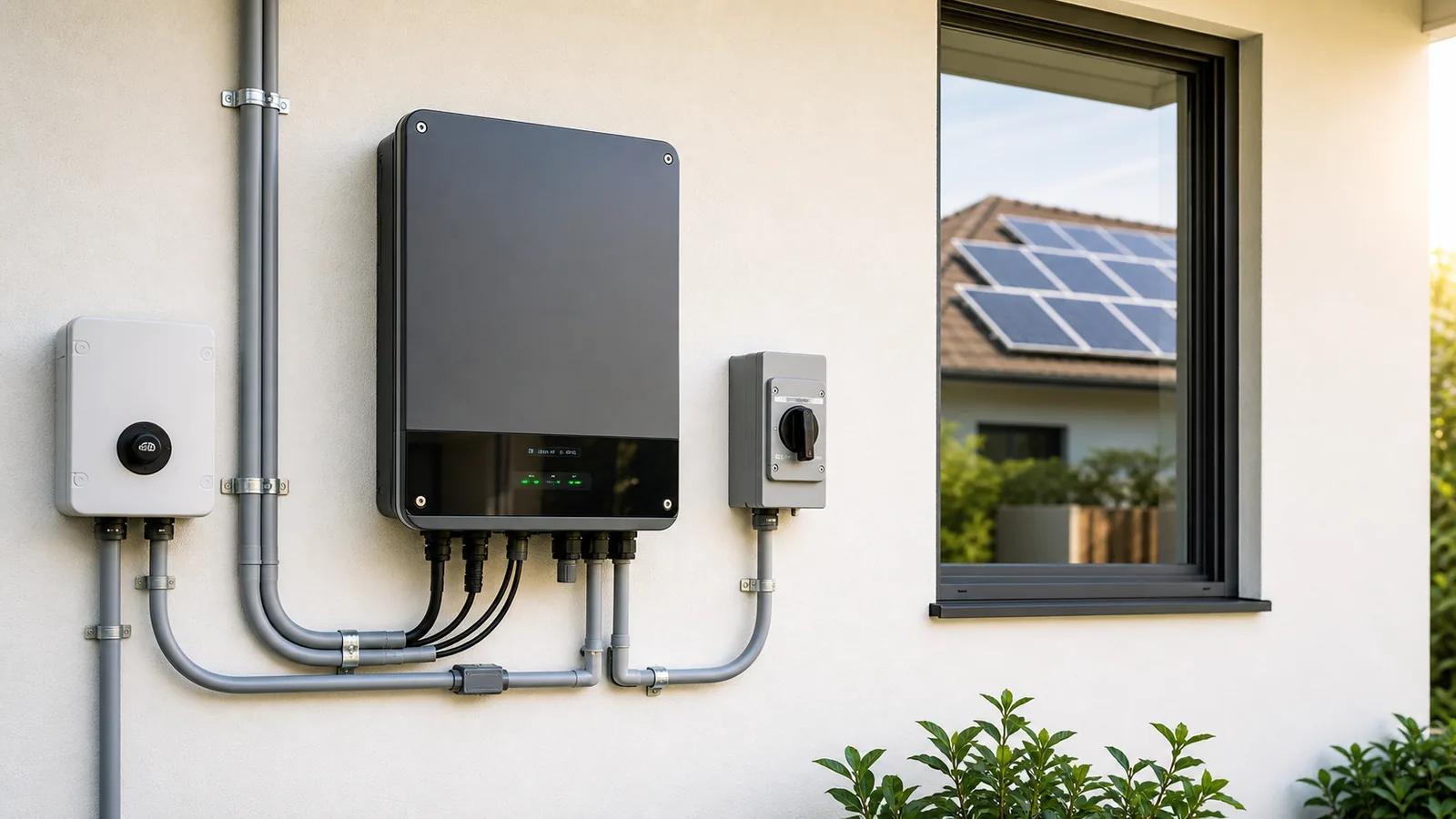
The inverter turns solar panel electricity into power your home can use. It also affects monitoring, shade behavior, service work, battery compatibility, and long-term reliability. The best choice depends on the roof, not just the brand name.
String inverters
A string inverter connects groups of panels to one central inverter. It can be cost-effective on simple roofs with one or two clean sun-facing planes. The tradeoff is that monitoring may be less granular and shade on one section can affect the string depending on the design.
Microinverters
Microinverters sit behind individual panels. They can help on complex roofs, support panel-level monitoring, and make future troubleshooting more specific. They can also cost more and place more electronics on the roof.
Power optimizers
Optimizers are installed at the panel level but still feed a central inverter. They can improve design flexibility and monitoring while keeping conversion centralized. Ask how the warranty and service process works for both rooftop components and the inverter.
Questions for your quote
- Which inverter architecture is included, and why does it fit this roof?
- Will monitoring show each panel or only total system production?
- How does the design handle shade, clipping, and future battery plans?
- What parts are on the roof, and who services them if one fails?
If equipment changes affect system size or production, revisit the Panel Estimator before comparing payback numbers.
Practical next steps for homeowners
The inverter decision should follow the roof design. A simple, unshaded roof may not need the same equipment as a roof with several orientations, dormers, or afternoon tree shade. Ask the installer to explain the choice in plain language.
Service questions
- Which parts are installed on the roof and which are mounted at ground level?
- Who replaces a failed inverter component, and how long does service usually take?
- Does the monitoring platform show panel-level data or only system totals?
- How does this inverter path affect future battery installation?
Do not over-optimize one feature
Panel-level monitoring is useful, but it is not the only decision. Cost, warranty, installer familiarity, roof access, shade behavior, and battery goals all matter. The best inverter is the one that fits the actual design and service plan.
If inverter choice changes expected production, revisit the Panel Estimator before relying on the final payback math.
Where to go next
For the full planning path, use the Solar Battery Buying Guide as the main hub, then run the matching SolarPel calculator with your own usage, cost, and roof assumptions.
Article FAQ
Common questions
Are microinverters always better?
No. They can be useful on complex or shaded roofs, but string inverters can be efficient and cost-effective on simple layouts.
Do inverter choices affect monitoring?
Yes. Some systems offer panel-level monitoring while others mainly show system-level production.
Can I add a battery later with any inverter?
Not always. Ask whether the inverter design supports your likely battery path before installation.
Written by
Firoz Ahmed
SolarPel Editorial Lead
Firoz Ahmed writes SolarPel's solar calculators, planning guides, and technical explainers with a focus on practical home-energy decisions, transparent assumptions, and source-backed solar research.