Why Actual Solar Production Can Differ From Estimates
Learn why actual solar output can differ from estimates because of shade, weather, temperature, soiling, inverter limits, and assumptions.
Quick answer
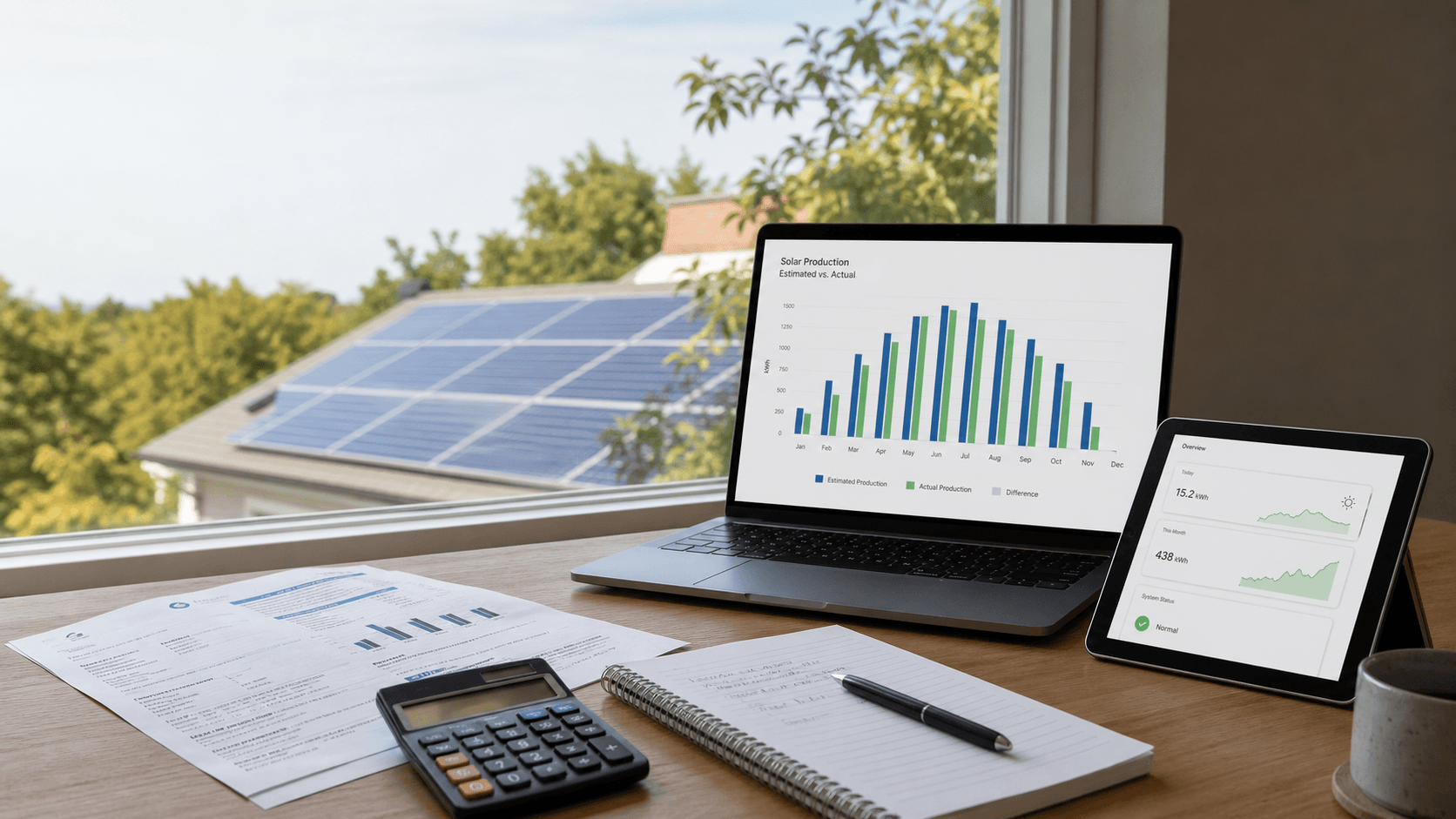
Solar production estimates are modeled expectations, not promises. Your actual output can be higher or lower because of weather, season, shade, panel temperature, soiling, inverter behavior, monitoring gaps, and the assumptions used in the original estimate.
The useful question is not whether every month matches the proposal. The better question is whether the difference makes sense when you compare the estimate against real conditions.
Use the Panel Estimator after reviewing your utility bill and production history so your next estimate uses better inputs.
Why estimates are not exact
A solar proposal usually starts with a model. The model may include location, roof direction, roof pitch, shade assumptions, panel wattage, system losses, and expected sunlight. If one of those assumptions is off, the result can be off too.
- the estimate used average weather, but your month was cloudy
- the shade report missed seasonal tree growth
- panels ran hotter than expected
- the inverter clipped output during peak conditions
- soiling, dust, pollen, or snow reduced output
- the monitoring app missed data or changed reporting windows
Weather and seasonal variation
Solar output changes across the year. A low winter month does not automatically mean the system is broken. Shorter days, lower sun angles, storms, snow, and cloud cover can all reduce production.
Compare output against the same month or season, not only against the best month of the year.
Shade and soiling
Shade can have an outsized effect when it lands on the wrong part of an array or appears during peak production hours. Soiling is usually more gradual, but it can still matter in dusty or dry conditions.
- trees that have grown since installation
- new nearby structures
- leaf buildup
- snow cover
- heavy pollen or dust
- bird debris or roof runoff patterns
For a deeper shade explanation, read Roof Shading and Solar Panels.
Temperature and equipment losses
Solar panels are tested under standard conditions, but rooftops are hotter and messier than a lab. Higher panel temperature can reduce output. Wiring, inverter conversion, mismatch, and normal system losses also affect production.
This is why a good estimate should include a system loss assumption instead of treating panel wattage as perfect real-world output.
Inverter clipping and monitoring gaps
Inverter clipping happens when the panels could produce more power than the inverter can convert at that moment. A small amount can be normal in some designs. Heavy or frequent clipping may deserve review.
Monitoring gaps can also make production look lower than it really was. Before assuming a system problem, compare monitoring data with inverter data or utility export data when available.
If inverter behavior is the concern, use this with the Solar Inverters Guide.
Estimate vs actual output table
| Difference | Possible reason | What to check first |
|---|---|---|
| Lower in winter | seasonal sun and weather | compare same-season expectations |
| Lower after tree growth | new shade | roof/shade view during peak sun |
| Lower during heat waves | temperature losses | weather and panel temperature |
| Lower only in app | monitoring issue | inverter data and reporting dates |
| Flat top on peak days | inverter clipping | inverter sizing and daily production curve |
When to call an installer
Call the installer if production is consistently below the estimate after normal weather and seasonality are considered, or if you see alerts, offline equipment, sudden output drops, or unexplained zero-production days.
- production by month
- utility bill or export data
- monitoring screenshots
- shade photos
- equipment alerts
- original proposal assumptions
Bottom line
Actual solar output will not perfectly match an estimate every month. The goal is to understand whether the difference is explainable. Weather, shade, soiling, temperature, inverter behavior, and model assumptions are the first places to look before assuming the system has failed.
For a cleaner long-term planning model, compare this page with the Solar System Sizing Guide and the Solar Panel Degradation Guide.
Evidence
Sources and methodology
SolarPel production troubleshooting separates modeled assumptions from real operating conditions and avoids treating proposal estimates as guaranteed output.
decision table
Provides a troubleshooting table that connects common production differences to the first thing homeowners should check.
methodology
Separates weather, shade, temperature, inverter behavior, and monitoring data instead of blaming one factor too quickly.
mistake warning
Warns readers not to compare a low winter month against the best month of the year.
Article FAQ
Common questions
Why did my solar produce less this month?
Weather, shorter daylight, shade, snow, dirt, monitoring gaps, and seasonal variation can all reduce monthly production. Compare against the same season and original estimate assumptions.
Is inverter clipping bad?
A small amount of clipping can be normal in some designs. Heavy clipping or unexpected clipping should be reviewed with the installer because it can affect annual output.
How much output variation is normal?
Variation is normal month to month. What matters is whether annual production is tracking reasonably against the estimate after weather, shade, and system assumptions are considered.
Written by
Firoz Ahmed
SolarPel Editorial Lead
Firoz Ahmed writes SolarPel's solar calculators, planning guides, and technical explainers with a focus on practical home-energy decisions, transparent assumptions, and source-backed solar research.