Home Energy Audit Before Solar: What to Check First
Do a home energy audit before solar by reviewing bills, finding major loads, reducing waste, and preparing cleaner sizing inputs.
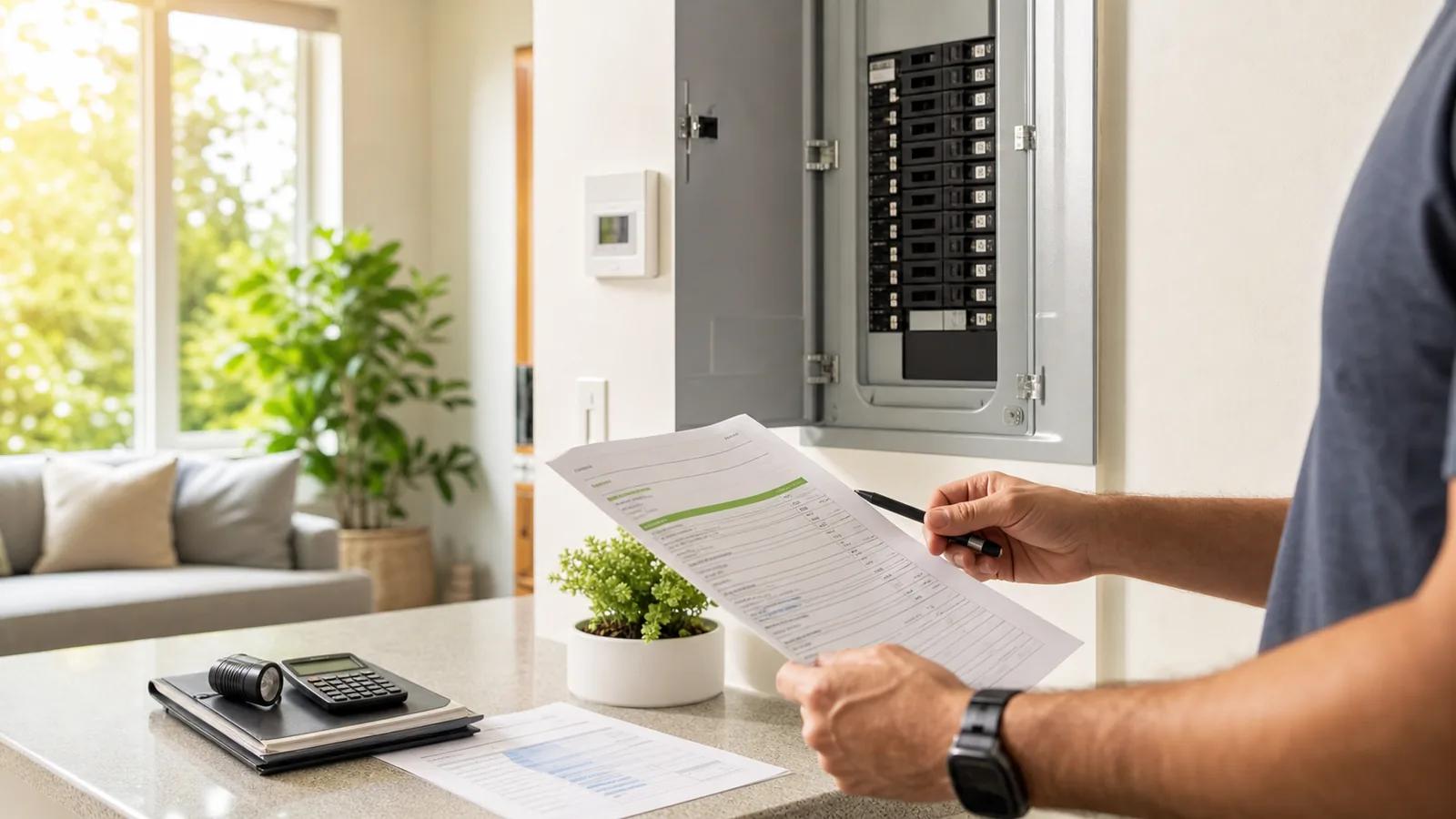
A home energy audit before solar helps you avoid oversizing the system around waste. It also gives you cleaner inputs for calculators and installer proposals. The goal is not perfection. The goal is to understand where electricity goes before buying equipment to offset it.
Start with the electric bill
Collect 12 months of bills and note total kWh, peak months, rate plan, fixed charges, and any demand or time-of-use details. Solar sizing should reflect the whole year, not only the most recent bill.
Find the big loads
- Air conditioning, electric heat, pool pumps, water heating, and EV charging usually matter most.
- Old refrigerators, dehumidifiers, and always-on electronics can create steady background use.
- Seasonal loads should be separated from everyday base load.
- Future loads should be estimated before final solar sizing.
Fix easy waste before sizing
Basic efficiency work can reduce the solar system size you need. Thermostat schedules, LED lighting, sealing obvious air leaks, pump timers, and appliance settings may be cheaper than adding more panels to cover waste.
Turn the audit into solar inputs
After the audit, you should know annual kWh, likely future kWh, and which loads might be shifted or reduced. That makes panel estimates, battery sizing, and ROI calculations more honest.
Use the Energy Consumption Calculator before requesting quotes, then carry the same usage assumptions into the panel and ROI calculators.
Practical next steps for homeowners
Walk through the home with a recent electric bill open. The point is not to become an energy auditor in one afternoon. The point is to identify the loads that can distort solar sizing if they are ignored.
Room-by-room checks
- Kitchen: note extra refrigerators, freezers, electric cooking, and appliances that run every day.
- Laundry and water heating: check whether dryers, water heaters, or recirculation pumps are electric.
- Garage and outdoor loads: include EV charging, pool pumps, well pumps, landscape lighting, and workshop equipment.
- Heating and cooling: separate normal HVAC use from unusually hot or cold months.
Turn findings into better solar inputs
If a load is temporary, do not let it drive a 25-year system decision. If a load is coming soon, like an EV or heat pump, include it as a future scenario. Good solar planning is less about one perfect number and more about knowing which number is current use and which number is future use.
Use the Energy Consumption Calculator to test changes before you use the panel or ROI tools.
Where to go next
For the full planning path, use the Solar System Sizing Guide as the main hub, then run the matching SolarPel calculator with your own usage, cost, and roof assumptions.
Article FAQ
Common questions
Should I reduce usage before sizing solar?
Yes. Efficiency improvements can reduce the system size you need and may improve payback before panels are installed.
How much bill history should I collect?
Use 12 months when possible so seasonal air conditioning, heating, and holiday loads are included.
Do I need a professional audit before solar?
Not always. A basic homeowner audit is enough for early planning, but professional help can be useful for high bills or comfort problems.
Written by
Firoz Ahmed
SolarPel Editorial Lead
Firoz Ahmed writes SolarPel's solar calculators, planning guides, and technical explainers with a focus on practical home-energy decisions, transparent assumptions, and source-backed solar research.