Solar Panels Without a Battery: Pros, Limits, and When Storage Matters
Learn when solar panels work without a battery, what grid-tied systems can and cannot do, and when backup storage is worth comparing.
Quick answer
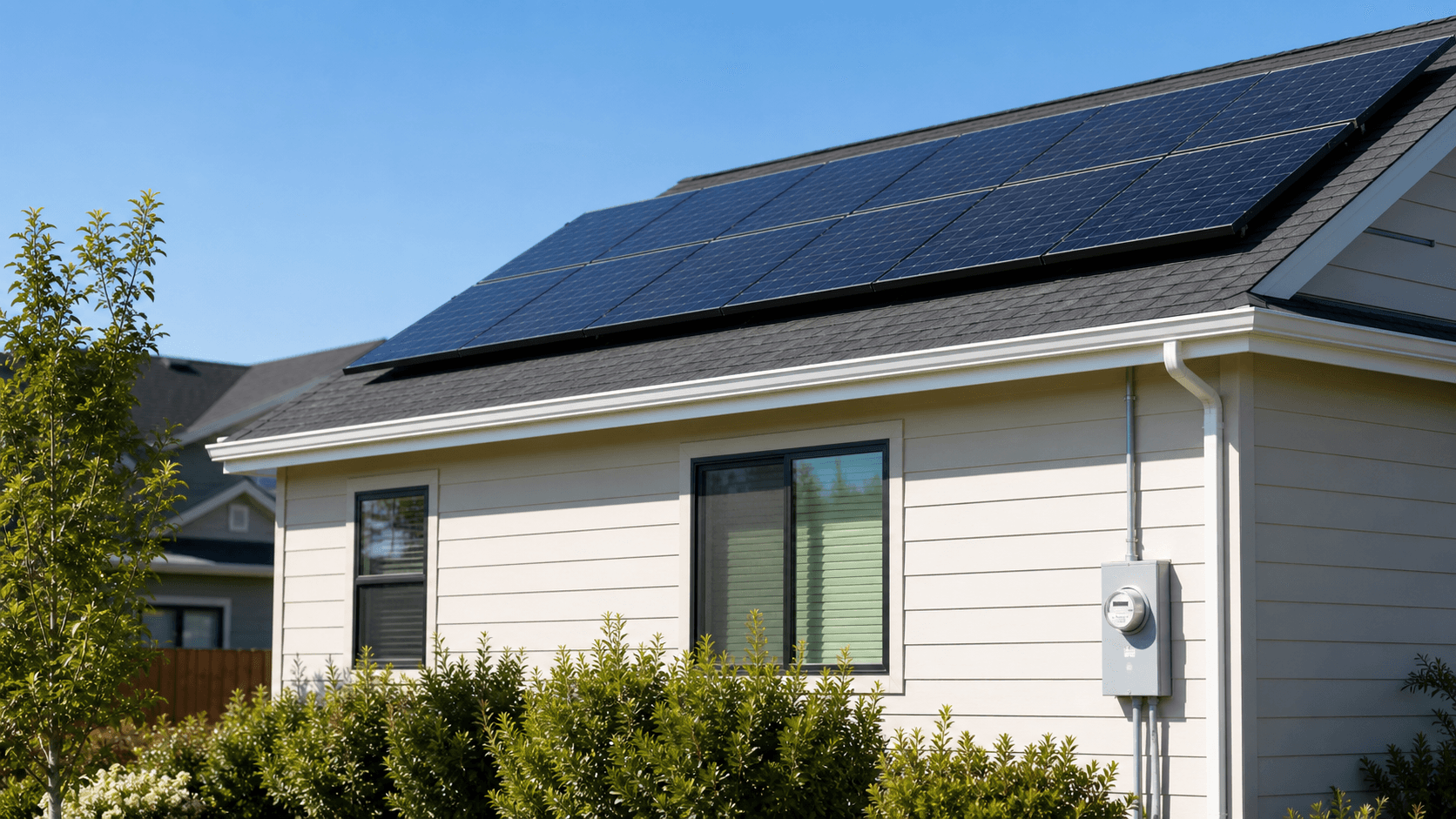
Yes. Most home solar systems can work without a battery when they are connected to the electric grid. A panels-only system can reduce daytime electricity use and may export extra solar energy under your utility's credit rules.
The important limitation is backup power. In most standard grid-tied systems, solar panels shut down during an outage unless the system includes approved backup equipment.
If your first goal is bill reduction, start with the Panel Estimator. If outage backup matters, compare the result with the Battery Sizer.
How solar works without battery storage
In a common grid-tied solar setup, the solar array powers home loads when the sun is available. If production is higher than the home is using, the extra energy can flow to the grid. If the home needs more than the panels produce, the grid fills the gap.
That means a battery is not required for basic solar savings. The utility grid effectively remains the backup source for normal non-outage hours, while the solar system reduces how much electricity you buy over time.
Panels-only vs solar-plus-battery
| Planning question | Panels without battery | Solar with battery |
|---|---|---|
| Main purpose | Lower electricity bills | Bill savings plus backup or energy shifting |
| Outage behavior | Usually shuts down unless special equipment is installed | Can power selected loads if designed for backup |
| Upfront cost | Usually lower | Usually higher because storage and backup wiring are added |
| Best fit | Homes focused on bill reduction | Homes with outage, time-of-use, or weak export-credit concerns |
What happens during a blackout
Most grid-tied solar systems stop exporting power during a blackout. This safety behavior helps protect utility workers and prevents an uncontrolled solar system from energizing lines during an outage.
Some systems can provide limited daytime backup with specific equipment, but homeowners should not assume ordinary panels-only solar will keep lights, refrigerators, internet, or HVAC running when the grid is down.
When solar without a battery makes sense
A panels-only system is often the cleaner first step when your main goal is reducing electric bills and your utility export rules are reasonably favorable.
- Your main goal is bill reduction, not outage backup.
- Your utility gives reasonable credit for exported solar energy.
- Outages are rare, short, or not a major concern for your household.
- You want a lower upfront project cost.
- You may add storage later after reviewing real production and usage patterns.
When a battery becomes worth comparing
A battery is worth comparing when your utility rules, outage risk, or household load pattern make daytime-only solar less useful on its own.
- You want backup power for critical loads.
- Your utility has weak export credits or net billing rules.
- Time-of-use rates make evening electricity expensive.
- You want more control over when solar energy is used.
- You are planning EV charging, heat pumps, or other future loads.
Use the Solar Batteries Guide and Solar Battery Buying Guide before treating storage as required or unnecessary.
Ask if the system is battery-ready
Even if you skip storage today, ask whether the proposed system can support a battery later. Battery retrofits can depend on inverter type, electrical panel layout, backup-load goals, wall space, and local permitting.
- Which inverter design is being proposed?
- Can a battery be added later without replacing major equipment?
- Would the battery back up the whole home or only critical loads?
- What electrical work would be required for a future retrofit?
- Would incentives apply differently if storage is added later?
How utility rules affect the decision
The battery decision is closely tied to how your utility credits exported solar. Strong export credits can make panels-only solar more attractive. Weak export credits can make self-consumption or battery storage more valuable.
Before comparing storage quotes, read the Net Metering Guide and check whether your utility uses net metering, net billing, time-of-use rates, or another export-credit structure.
What to calculate next
If you are planning a panels-only system, estimate the array first with the Panel Estimator. Then compare payback with the Solar ROI Calculator. If backup is part of the decision, size only your important outage loads in the Battery Sizer.
Bottom line
Solar panels do not need a battery to reduce electric bills. For many homeowners, panels-only solar is the simpler and lower-cost starting point. A battery becomes a separate planning decision when backup power, weak export credits, time-of-use rates, or future load control matter.
Evidence
Sources and methodology
This guide separates normal grid-tied bill savings from backup-power behavior. It avoids universal outage claims and tells readers to verify utility rules, inverter design, and local code before relying on a panels-only or battery-ready system.
decision table
Compares panels-only solar with solar-plus-battery using homeowner decision criteria.
mistake warning
Warns readers that ordinary grid-tied solar usually does not provide outage backup without approved backup equipment.
calculator example
Routes readers to panel sizing, ROI, and battery sizing calculators based on their decision path.
Article FAQ
Common questions
Do solar panels work without a battery?
Yes. Grid-tied solar panels can lower electricity bills without a battery. The grid supplies power when panels are not producing enough.
Do solar panels work during a blackout without a battery?
Usually no. Most standard grid-tied solar systems shut down during outages unless they include approved backup equipment.
Is solar cheaper without a battery?
Usually yes upfront. A panels-only system avoids storage equipment, battery installation work, and backup-load design costs.
Can I add a solar battery later?
Often yes, but it depends on inverter choice, electrical layout, local code, backup goals, and whether the original system was designed with storage in mind.
Written by
Firoz Ahmed
SolarPel Editorial Lead
Firoz Ahmed writes SolarPel's solar calculators, planning guides, and technical explainers with a focus on practical home-energy decisions, transparent assumptions, and source-backed solar research.